
Struggling to know how to floss with braces in Charlottesville, VA? Use waxed floss and a floss threader to clean around your braces. Thread the floss under the main wire, then curve it around each tooth in a C-shape and move it up and down gently. Reach below the gumline, but avoid snapping the floss to prevent irritation.
Read the full article to learn more tips for keeping your braces clean and your smile healthy.

Why Flossing with Braces is Important
Braces are great for straightening teeth, but they also create spaces for food and bacteria to hide. If plaque and debris stay around your braces for too long, it can lead to problems like:
- Tartar buildup.
- Tooth decay and cavities.
- Gum disease and gum inflammation.
- Weakened enamel.
Tools for Flossing with Braces
Flossing with braces is easier and faster when you use the right tools. Here are the top orthodontist-recommended options:
1. Floss Threaders
Floss threaders are small plastic tools that guide dental floss under the wires of braces. They work like a needle, helping you floss around each tooth with ease. These are a must-have for maintaining proper dental hygiene while wearing braces.
2. Water Flossers
Water flossers, also called oral irrigators, spray a steady stream of water to remove food debris, plaque, and bacteria. They are gentle on gums and ideal for those who struggle with traditional floss.
3. Super Floss
Super floss is designed specifically for braces. It has a stiff end for threading, a spongy middle for cleaning braces, and regular floss for removing hidden plaque. Some brands even come in pre-measured pieces, making it more convenient to use.
4. Interdental Brushes
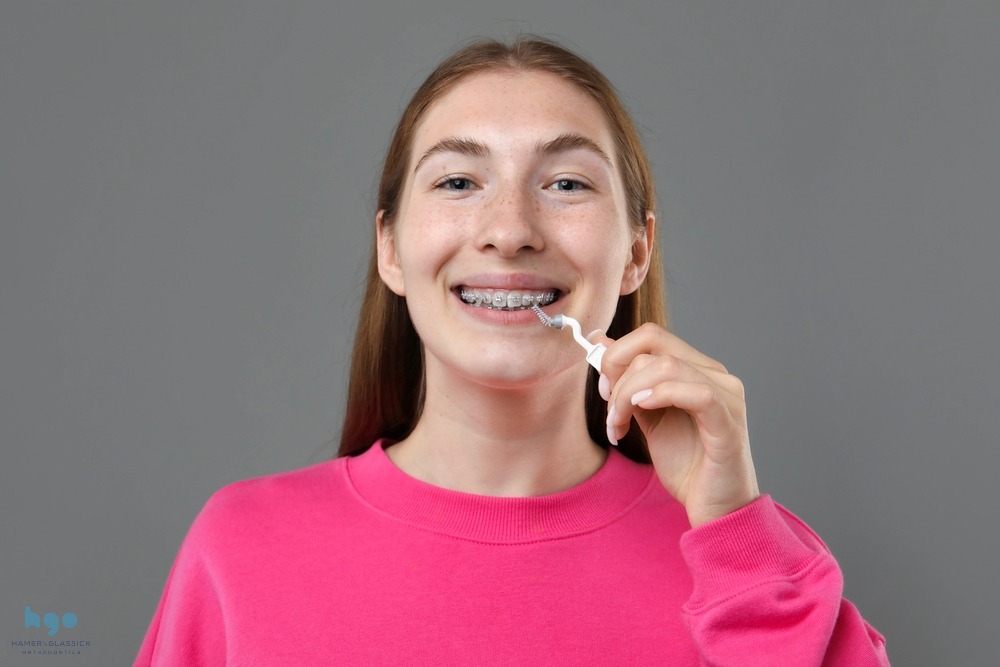
Interdental brushes, or proxabrushes, are tiny brushes that fit between teeth and under braces wires. They are perfect for removing plaque buildup and cleaning areas that floss may miss.
5. Floss Picks
Floss picks include pre-threaded floss attached to a handle, making them a quick and simple option. Some floss picks are specifically designed for braces, with thinner floss to slide between brackets easily.
Where to Find Oral Hygiene Tools
You can find floss threaders, water flossers, and small interdental brushes at most local drugstores or online stores. These tools are easy to use and can make your daily braces care much simpler and more effective. At Hamer & Glassick Orthodontics in Charlottesville, VA, we also help patients choose the right tools to keep their smiles clean and healthy.
Step-by-Step Guide to Flossing with Braces
Flossing with braces might take more time, especially at first, but the process gets easier with practice. Follow these steps for effective flossing:
Step 1: Prepare the Floss
Cut about 18 inches of dental floss. Thread the floss into a floss threader tool, then guide it under the braces wire and between your teeth.
Step 2: Use a Gentle Sawing Motion
Wrap the floss around one tooth in a “C” shape. Use gentle motions to move the floss up and down along the gumline. Avoid snapping the floss, as this can harm the braces or irritate your gums.
Step 3: Repeat for Each Tooth
Move to the next tooth by threading the floss under the wire again. Repeat the process for every tooth, including the hard-to-reach molars. According to an orthodontic expert, Dr. Viecilli at Limestone Hills Orthodontics in Austin, TX, consistent flossing in these areas is critical to avoid enamel damage and gum inflammation during orthodontic care.
Step 4: Add a Water Flosser
For extra thorough cleaning, use a water flosser after traditional flossing. Aim the water stream along the gumline and between teeth for maximum plaque removal.
Step 5: Brush Your Teeth
Finish by brushing your teeth with a soft-bristle toothbrush. Use fluoride toothpaste to strengthen enamel, and brush gently around the brackets and wires.
Flossing Tips for Different Types of Braces
Different types of braces may require slight adjustments to your flossing routine:
- Metal Braces: Use floss threaders to clean around each metal bracket and wire.
- Clear Braces: Floss carefully to avoid scratching the clear materials.
- Lingual Braces: As these braces sit behind your teeth, water flossers or proxabrushes are especially helpful.
- Self-Ligating Braces: These braces have fewer components, so flossing may be slightly easier.
Overcoming Flossing Challenges
When starting out, flossing with braces can feel awkward. Common challenges and their solutions include:
Sensitive Gums
Gums may feel sore or bleed when you first start flossing with braces. Rinse your mouth with warm saltwater to reduce irritation. With regular flossing, your gums will toughen up and feel less sensitive. Be gentle at first and take your time to avoid pain. After a week or two, your gums will heal faster and stay stronger.
Hard-to-Reach Areas
The back teeth are harder to floss with braces. Use super floss, water flossers, or interdental brushes for better accessibility. These tools help clean around wires and brackets more easily. Spend a few extra seconds on these spots to make sure no food or plaque is left behind.
Trouble Handling Floss
If string floss is hard to manage, try floss picks or proxabrushes. These make flossing faster and more convenient while protecting your braces. They’re also easy to carry and great for quick cleanups after meals. Using these tools can help you stay on track with your daily oral care routine.
Life After Braces
Flossing is important even after your braces are removed. Follow these tips to maintain a healthy smile:
- Clean Your Retainer: Brush and rinse your retainer daily to keep it free of bacteria and plaque.
- Keep Flossing: Make flossing a non-negotiable part of your daily dental routine.
- Brush Regularly: Use fluoride toothpaste to keep teeth and gums strong.
Good flossing habits built during braces treatment will carry over into your post-braces life, making it easier to maintain oral health.
Why Choose Hamer & Glassick Orthodontics?
At Hamer & Glassick Orthodontics in Charlottesville, VA, we’re committed to helping our patients achieve clean, healthy smiles. Our team provides:
- Personalized Guidance: One-on-one flossing demonstrations tailored to your braces.
- Flossing Kits: Starter tools to simplify your at-home dental hygiene routine.
- Expert Support: Advice and tips for overcoming challenges like gum sensitivity or hard-to-reach spaces.
Keep Your Smile Clean with Hamer & Glassick Orthodontics
At Hamer & Glassick Orthodontics in Charlottesville, VA, we make flossing with braces simple and effective. Our team offers hands-on guidance, flossing kits, and expert advice to help you maintain excellent oral hygiene throughout your orthodontic treatment. Schedule your appointment today and learn how easy it can be to keep your teeth and gums healthy while wearing braces!
About The Authors
Dr. Andy Glassick – Orthodontist in Charlottesville, VA
Dr. Rodrigo Viecilli – Orthodontist in Austin, TX
Frequently Asked Questions
Can dentists tell if you floss?
Yes, dentists can easily spot if you’ve been flossing or not. When you floss often, your gums look healthy and pink, and they don’t bleed much during a check-up. There’s also less plaque between your teeth. But if you skip flossing, your dentist may see red, swollen gums, more plaque, and even small cavities between teeth.
How many times a day should I floss with braces?
If you have braces, try to floss at least once a day, usually before bed. If you can, it’s even better to floss after meals or snacks. It may take extra time, but it helps keep your teeth and gums healthy while you wear braces. Be gentle and take your time.
Do you floss or brush first?
People often ask whether it’s better to floss or brush first. The truth is, there’s no single right answer. Some people floss first to loosen food and plaque before brushing. Others like to brush first and floss after. Either way works, what matters most is that you do both every day.