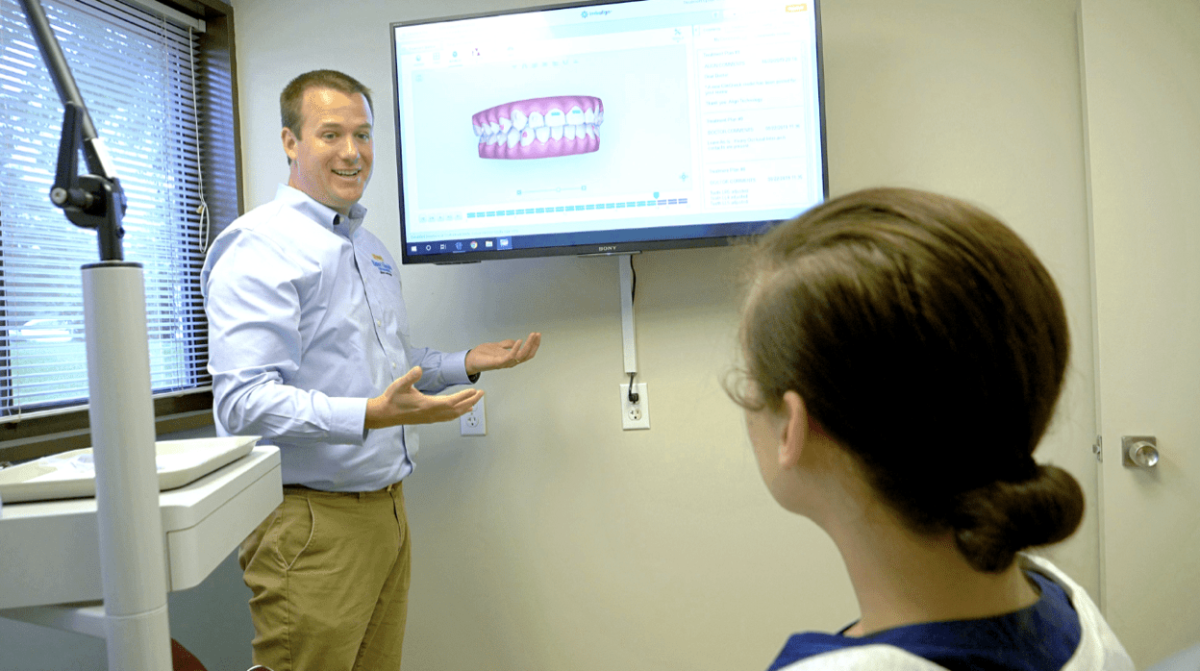
Choosing braces used to mean one option: shiny metal brackets and wires. Today, you and your family have real choices. Whether you’re a parent researching options for a child, a teen weighing style against function, or an adult finally ready to invest in your smile, understanding the different types of braces is the first step toward making a confident decision.
At Hamer & Glassick Orthodontics, we help you compare every option so you can pick what fits your life and your goals. Braces are a big step, and the start is the most important part of getting the outcome you want.

What Are the Different Types of Braces?
The five main types of braces are metal braces, ceramic (clear) braces, self-ligating braces, clear aligners like Invisalign, and lingual braces. Each uses gentle, steady pressure to move teeth into their proper positions, but they differ in appearance, comfort, cost, and how they attach to your teeth.
Fixed options (metal, ceramic, self-ligating, and lingual) stay bonded to your teeth throughout treatment. Removable options like Invisalign use a series of custom trays you wear most of the day and take out to eat and brush.
Which one is right for you depends on the complexity of your case, your age, and your lifestyle. A board-certified orthodontist like Dr. Hamer or Dr. Glassick can walk you through your options and recommend the approach that will deliver the best result for your specific bite.
How Do Braces Work? The Science Behind Tooth Movement
All braces work on the same basic principle: continuous, light pressure applied over time causes the bone around your teeth to remodel, allowing teeth to shift into better positions. It’s a biological process, not a mechanical one, which is why it takes months rather than days.
Here’s how each system delivers that pressure:
- Fixed braces use small brackets bonded to each tooth, connected by an archwire. The wire is shaped to guide teeth toward their target positions. Ligatures (tiny elastics or clips) hold the wire in place.
- Self-ligating braces skip the elastics and use a built-in clip mechanism, which reduces friction on the wire.
- Clear aligners use a series of custom trays, each slightly different from the last. You wear each tray 20-22 hours a day for about one to two weeks before moving to the next.
For fixed braces, you’ll come in for adjustments every 4-8 weeks so your orthodontist can update the wire or tighten components. With clear aligners, check-ins are typically spaced a bit further apart.
Total treatment usually runs 12-36 months, depending on how much movement is needed. According to the American Association of Orthodontists, retention with retainers is essential after any type of braces, since teeth naturally want to drift back toward their original positions.
Benefits and Trade-offs of Each Braces Type
Every option has strengths. The trick is matching those strengths to what matters most to you.
What Are Metal Braces?
- Best for: Complex bite issues, severe crowding, growing kids and teens
- Pros: Most durable, handles the widest range of cases
- Trade-offs: Most visible, requires food restrictions (no popcorn, sticky candy, hard nuts)
- Bonus: Modern metal braces are smaller and more comfortable than the ones you remember from decades ago
Who Should Consider Clear (Ceramic) Braces?
- Best for: Adults and teens who want fixed treatment without the metal look
- Pros: Tooth-colored brackets blend in, work just like metal braces
- Trade-offs: Slightly more fragile, ligatures can stain if not cared for properly
What Are Self-Ligating Braces?
- Best for: Patients who want fewer adjustment appointments and less friction
- Pros: No elastic ties, may allow slightly longer intervals between visits, easier to keep clean
- Trade-offs: Still visible if metal
How Do Invisalign Clear Aligners Work?
- Best for: Adults and responsible teens with mild to moderate alignment needs
- Pros: Nearly invisible, removable for eating and brushing, no food restrictions, easier oral hygiene
- Trade-offs: Requires discipline (20-22 hours daily wear), not ideal for very complex cases, easy to misplace if you’re not careful
Who Are Lingual Braces Best For?
- Best for: Adults who want fully hidden treatment
- Pros: Bonded to the back of teeth, completely invisible from the front
- Trade-offs: Longer adjustment period for speech, harder to clean, not offered at every office
No matter which option you choose, the long-term benefits are the same: better oral health, improved chewing function, a bite that wears evenly over your lifetime, and a smile you’re proud to show off. Choosing the right option often comes down to a careful conversation with a board-certified orthodontist who can weigh the mechanics of your bite against your day-to-day life.
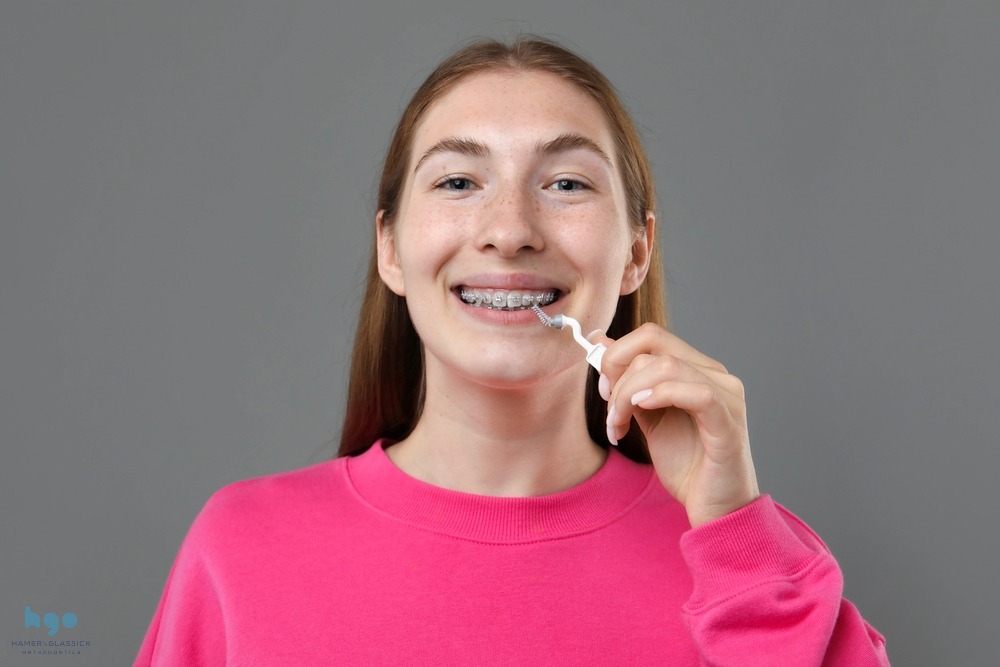
Braces Comparison: Side-by-Side Breakdown
Here’s a quick reference to help you compare at a glance:
| Type | Visibility | Compliance Needed | Best For | Typical Treatment Time |
|---|---|---|---|---|
| Metal Braces | Most visible | Low (fixed) | Complex cases, kids, teens | 18-30 months |
| Clear (Ceramic) Braces | Low visibility | Low (fixed) | Adults, teens wanting discretion | 18-30 months |
| Self-Ligating Braces | Visible | Low (fixed) | Efficiency-focused patients | 12-24 months |
| Invisalign Aligners | Nearly invisible | High (must wear 20-22 hrs) | Adults, mature teens | 12-24 months |
| Lingual Braces | Invisible from front | Low (fixed) | Adults prioritizing full discretion | 18-36 months |
A few key comparisons worth understanding:
- Metal vs. ceramic braces: Same mechanics, different look. Ceramic wins on aesthetics; metal wins on durability.
- Fixed braces vs. clear aligners: Compliance is the deciding factor. If you’ll actually wear the trays as directed, aligners work beautifully. If not, fixed braces do the work for you.
- Self-ligating vs. metal braces: Slightly fewer visits and less friction, but the visual difference is minimal.
- Lingual vs. Invisalign: Both are discreet, but lingual braces stay put while aligners come out. Lingual braces stay bonded full-time; Invisalign takes more day-to-day discipline to wear as directed.
Understanding these trade-offs up front tends to make the decision easier once you sit down with an orthodontist to review your bite in detail.
Who Is a Good Candidate for Each Type of Braces?
The best type of braces depends less on preference and more on what your teeth actually need. Here’s how candidacy generally breaks down:
Fixed braces (metal, ceramic, self-ligating) are usually preferred for:
- Complex bite issues (overbite, underbite, crossbite)
- Severe crowding or spacing
- Cases requiring rotation of teeth
- Children under 11 who benefit from consistent, no-compliance-needed treatment
Clear aligners like Invisalign work well for:
- Mild to moderate crowding or spacing
- Teens and adults who will commit to wearing them 20-22 hours daily
- Patients who need to remove appliances for work, sports, or special events
- Public-facing professionals and adults wanting a discreet option
Lingual braces are a great fit for:
- Adults who want treatment completely hidden from view
- Patients who don’t want the compliance responsibility of aligners
Both Dr. Hamer and Dr. Glassick are board-certified orthodontists, which means they completed additional years of specialty training beyond dental school after finishing their general dentistry education. Orthodontics is a smaller specialty within dentistry, so the recommendation you receive from a board-certified orthodontist is based on years of focused experience rather than a quick opinion.
The best way to know which option fits you is a full exam. That includes digital scans (no goopy impressions), a review of your bite and jaw alignment, and a walk-through of every option that would work for your case.

Frequently Asked Questions About Types of Braces
What type of braces is best?
There’s no single “best” type of braces. The right option depends on your bite, the complexity of your case, your age, and your lifestyle. Metal braces handle the widest range of cases, while Invisalign works beautifully for mild to moderate alignment issues in disciplined wearers. A conversation with a board-certified orthodontist is the only way to know for sure.
Which type of braces works fastest?
For simple cases, clear aligners can sometimes finish in as little as 6-12 months. For complex cases involving bite correction or significant crowding, fixed braces (metal or self-ligating) typically deliver faster, more predictable results. Treatment speed depends more on your specific case than on the type of braces you choose.
Are clear aligners better than metal braces?
Clear aligners are better for the right person, not everyone. If you have mild to moderate alignment needs and you’ll wear the trays 20-22 hours a day, Invisalign offers a nearly invisible, removable, food-friendly experience. For complex bites or patients who won’t comply with wear-time requirements, fixed braces deliver more reliable results.
Can adults get any type of braces?
Yes. Adults are candidates for every type of braces available today, including metal, ceramic, self-ligating, Invisalign, and lingual braces. Adult treatment may take slightly longer than teen treatment since bone remodeling happens more gradually, but the results are just as effective. More adults are getting braces today than ever before, and modern options make it easier to fit treatment into a professional lifestyle.
Ready to learn more about which type of braces might be right for you? Understanding your options is the start of your smile experience, and a conversation with a board-certified orthodontist like Dr. Hamer or Dr. Glassick can help you compare every path forward. You’ll want a full exam, digital scans, and a clear breakdown of what each option would look like for your specific case before making a decision, and that step brings you closer to your new smile, new you.